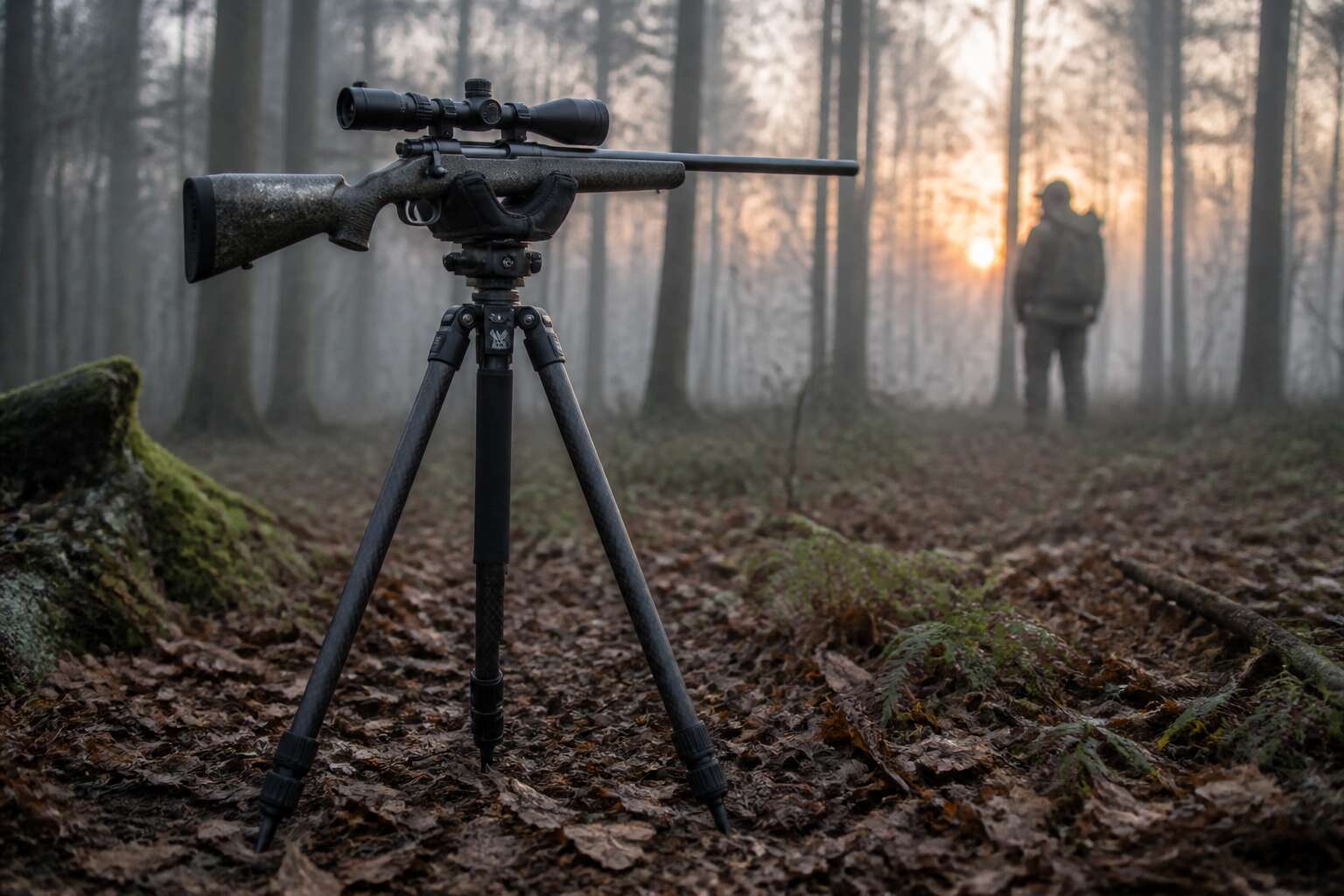
Understanding the Importance of a Tripod for Hunting
Why a Stable Platform Matters
At 300 metres, a one degree cant shifts your bullet’s impact by more than five metres. A hurried shot from an unstable position misses more often than it hits. This is where a hunting tripod changes everything.
The human body was not designed for sustained prone or kneeling positions. Muscles fatigue, breath control degrades, and the crosshairs drift. A tripod removes that variable. It holds the rifle steady relative to the ground, letting you focus on the shot instead of compensating for your own tremor.
A tripod delivers three concrete advantages:
- It absorbs your body’s natural sway.
- It frees both hands for glassing and ranging.
- It keeps your rifle ready without tiring your arms.
Stability is not a luxury. It separates a clean kill from a wounded animal disappearing over the ridge. In my experience, a stable platform changes the outcome before you squeeze the trigger.
Common Hunting Scenarios for Tripods
The bushveld whispers with a deceptive calm. The real work begins when the track turns to loose rock and the kudu bull melts into the thorn scrub. A hunting tripod becomes an extension of your patience. It allows you to hold a glass steady for the ten minutes it takes to confirm a trophy. It lets you range a distant herd without the tell-tale sway of an exhausted frame.
Consider the terrain of the Karoo. The plains stretch for kilometres, and the mirage dances on the horizon. You cannot lie flat; the grass is too high and the ground too hot. A tripod raises your line of sight above the shimmer, giving you a clear view of the animal. In the thickets of Limpopo, the shot is often a split-second opportunity through a narrow window. A stable platform means you are ready when the moment arrives.
The scenarios vary, but the principle holds:
– Glassing over a ridge without dropping your rifle.
– Waiting out a warthog at a waterhole in the late afternoon.
– Taking a precise shot at a blesbok across a drainage line.
A hunting tripod is not a gadget. It is a tool for the specific conditions of the South African veld. It turns a long shot into a manageable one. It turns a fleeting glimpse into a deliberate, ethical shot. I have watched hunters struggle with shooting sticks in the wind, and I have seen the quiet confidence of a hunter who simply set up his tripod and waited. The difference is in the execution. The rifle stays level, the target stays clear, and your heartbeat becomes irrelevant to the outcome.
Tripod vs. Shooting Sticks
A rifle resting on your forearm is a compromise. A tree branch is a gamble. And shooting sticks, for all their convenience, ask you to trust a system that moves with your breath. The difference between a hunting tripod and a pair of sticks is the difference between hoping and knowing. Sticks are for the quick rest, the 50 meter shot across a clearing. A tripod is for the moments that demand your full attention.
Consider the physics of a long shot. With sticks, the rifle pivots on a narrow point. Any breeze, any shift in your footing, and the crosshair drifts. A tripod absorbs that movement. It becomes a fixed point in a landscape of variables. When you are weighing a kudu bull at 200 meters, you want the rifle to be as still as the rock you are leaning against.
This is where a proper hunt is ng tripod earns its place in the bakkie. It is not a replacement for your sticks. It is an upgrade for the situations where they fail you.
– Constant wind that makes sticks quiver.
– Uneven ground where a solid stance is impossible.
– Waiting periods that exhaust your arms and shoulders.
– Shooting from a seated position over tall grass.
The value is in the discipline it forces. You set up, you settle, and you take your time. The shot becomes a process, not a reaction. That clarity is what turns a good hunter into a consistent one. The sticks stay in the bag. The tripod goes with you.
Benefits for Long-Distance Shooting
At 300 meters, the difference between a hit and a miss is measured in millimetres of movement. A hunting tripod eliminates the variables that turn a careful shot into a gamble. When the target is far, your body introduces error. Heartbeat, breathing, muscle fatigue. All of it transfers into the rifle.
The benefits of a tripod for long-distance shooting are concrete:
- It holds the rifle at the exact height you need, no matter the terrain.
- It transfers recoil into the ground, not your shoulder.
- It lets you focus on wind and drop instead of wobble.
I have watched shooters tighten their groups by half simply by adding a tripod to their setup. That is not opinion. That is physics!
Key Features to Look for in a Hunting Tripod
Height Adjustability and Leg Locks
The difference between a clean shot and a wobbling miss often lives in two overlooked details: height adjustability and leg locks. For any serious hunt is ng tripod, these features dictate how quietly you can shift from kneeling to standing positions. A fixed-height frame fails on uneven terrain, forcing you to compensate with your body. Adjustable centre columns offer that extra reach, but the locking mechanism decides whether you trust them.
- Twist locks spread pressure evenly across the joint.
- Flip locks provide faster operation but can catch on dry grass or branches.
A good leg lock should bite without grinding, allowing micro adjustments in seconds. When the sun drops over the Karoo, you need a tripod that holds its posture through a long afternoon. Test each joint before committing your rifle to it, because a silent click here means a steady shot later.
Material and Weight Considerations
The veld does not forgive a clumsy frame. I have carried a hunt is ng tripod across the Karoo’s shale, and each kilogram becomes a heavy reminder. Carbon fibre has a quieter heft, while aluminium rings with a dull clang. Weight is not a spec; it is the tremor in your arms by the fourth hour.
Material dictates temperament. Carbon fibre absorbs vibration, but demands a larger budget. Aluminium offers strong support for less, yet it holds the cold. Steel is the heaviest choice, often regretted.
- Carbon fibre: light, quiet, expensive.
- Aluminium: sturdy, affordable, mid-weight.
- Steel: solid, but punishing on slopes.
Your hunt is ng tripod must resist the elements. A wet morning can turn a poor finish to rust, while a quality anodised coating handles mist. Thicker legs dig into soft ground; thinner ones slide away. I once lost a shot because my rig sank into loose sand, and that memory still stings!
Load Capacity for Firearms
Three kilograms of rifle, scope, and ammunition feels heavier on a head rated for half that weight. The load capacity of a hunt is ng tripod determines whether your firearm sits rigid or sags. Every rifle and optic combination has a true weight, yet the rating must exceed it by a healthy margin.
If the legs tremble under a heavy action, the fault is not in your shooting. It is in the rating. A bolt gun with a suppressor, or a heavy barrel varmint rifle, changes the physics. The head must rotate smoothly under full load, not simply hold it. A hunt is ng tripod must also have a quick release plate that locks firmly without stripping the threads.
- Light varmint rifles: 10 kg
- Standard hunting rifles: 15 kg
- Magnum or suppressed builds: 20 kg plus
That margin absorbs the unexpected, like a loaded magazine or a bulky night scope.
Panning and Tilting Mechanisms
A stiff leg set means nothing if the head fights you. On a hunting tripod, the pan and tilt mechanisms determine how smoothly you track an animal. A fluid cartridge inside the head damps movement, while a cheaper friction mount lets torque run straight into your crosshairs.
I look for independent pan and tilt locks. That way you can tighten the tilt after setting elevation, then still sweep the pan for a follow-up shot. Detents, those clicking stops, feel precise indoors but they ruin a smooth lead on a warthog trotting through the bush!
- Adjustable drag control on both axes
- A tilt range that drops below horizontal for steep valleys
- All-metal internal gears that survive dust and rain
These features separate a hunting tripod from a photography stand.
Feet and Spikes for Ground Stability
Every hunting tripod stands on three points of contact. Those feet determine whether your aim stays true or drifts after the trigger pull. Most shooters overlook them until the rifle starts wobbling.
Rubber feet grip concrete and rock, but they slide on moist grass and loose gravel. Metal spikes bite into soil and hold firm. The best hunting tripod designs let you swap between the two in seconds.
- Serrated rubber feet for hard or slick surfaces
- Removable steel spikes for soft ground
- A threaded collar that allows tool-free changes
I look for a locking collar that won’t strip after repeated use. A cheap plastic mechanism will fail deep in the Karoo, with a trophy animal in your sights. That moment demands certainty, not guesswork!
Quick-Release Plate Systems
A quick release plate transforms how a rifle sits on a tripod. The plate locks into the pan head and connects to the rifle’s recoil lug. I have watched hunters lose shots because their attachment needed a wrench. A captive lever releases with one deliberate press. That speed matters when a kudu bull steps clear.
Choosing a hunt is ng tripod means balancing speed and security. The plate must match the load capacity of the legs. A lightweight mechanism on a heavy rifle invites flex. In the Karoo, dust gets into every seam. A sealed release stays positive after days of travel. The click when the plate seats is a sound I trust. No wobble, no doubt. That is the foundation of a clean shot.
Setting Up and Using Your Hunting Tripod Effectively
Proper Leg Spread and Height Adjustment
Most hunters blame ammunition when groups fall apart, but the real culprit is usually the geometry under the rifle. A tripod with legs spread too wide puts unnecessary stress on the leg locks and makes the whole platform top-heavy. Spread them too narrow and every breeze across the highveld becomes a full body experience.
Set the legs first, then adjust the column height. On sloping ground, extend the uphill leg slightly to level the platform. Do this before you mount the rifle, because once the weight is on, nothing wants to move.
- Spread the legs to shoulder width for a seated position
- Open wide for low prone shots, narrow for standing
- Lock each leg once you feel even pressure underneath
Check the level bubble after you cinch everything down. If it is off, loosen and repeat. A hunting tripod that holds still is the quietest piece of gear you will own.
Using a Tripod for Prone and Seated Positions
A hunting tripod is a tool that demands practice before it demands trust. You cannot simply unfold the legs, clamp the rifle, and expect a perfect shot. The platform rewards deliberate action and punishes haste, especially when you are working through the quiet minutes of a stalk.
For prone positions, the tripod becomes a low sled. You want the rifle level with your natural sightline, not forced into an awkward neck strain. The ground is your partner here. Use it to support your body while the tripod supports the rifle. For seated positions, the tripod takes on a different character. It becomes a table you build around your body, not a crutch you lean on.
A simple routine works well:
1. Position the tripod forward of your support hand.
2. Settle your body weight onto your rear leg.
3. Pull the rifle into your shoulder with steady pressure.
4. Adjust the column only after the legs are solid.
The quietest part of any hunt is the moment before the shot. A hunting tripod that holds still is the quietest piece of gear you will own. But it only earns that reputation through repetition. Spend an afternoon on the range with your tripod, working through these positions until the motions feel automatic. The field is no place to learn.
Maintenance and Care for Longevity
A professional hunter once told me that a tripod is a lifetime investment, but only if you treat it like one. That statement has stuck with me through countless veld excursions, and it holds true. The finest carbon fibre legs and precision head will fail you without a basic maintenance routine. Your gear endures dust, moisture, and the rough handling of a bakkie load bed, so attention is not optional.
Field care is a discipline. After each hunt, I wipe down the leg sections with a dry cloth to remove grit before it grinds into the locks. The quick release plate deserves the same respect. A loose plate is a missed opportunity.
– Clean the leg locks with a soft brush to expel sand.
– Inspect the rubber feet for wear after rocky terrain hunts.
– Apply a light silicone lubricant to the column, not the brakes.
– Check every bolt on the head assembly for tightness.
The storage environment matters as much as the cleaning. Keep your hunting tripod dry and out of direct sunlight when not in use. Prolonged heat degrades seals and lubricants. The hunt is ng tripod that rests properly will perform when the moment arrives.
Top Hunting Tripod Accessories and Upgrades
Ball Heads and Fluid Heads
A hunting tripod is only as good as the accessory attached to its top. In South Africa’s bushveld, where a trophy can appear and vanish in seconds, the head is the difference between a clean shot and a miss. A ball head delivers instant three dimensional adjustments with one knob. You can lock onto an animal at an awkward angle without shifting your body.
Fluid heads operate differently. They use internal cartridges to dampen motion, producing a smooth, controlled glide for tracking walking game across open grassland. A ball head holds rigid. A fluid head follows the animal.
- Ball heads lock firmly for static shots.
- Fluid heads allow seamless target tracking.
- Match the head to your hunting tripod weight rating.
Upgrade wisely, and your hunting tripod becomes an extension of your shooting.
Shooting Rests and Cradles
The rifle rest you bolt onto your hunting tripod decides how well you settle into a shot. A cradle holds the forend in a firm grip, while a shooting rest gives the rifle a flat, padded surface to sit on. I have watched shooters lose a trophy because their rifle tipped off a flimsy rest, so this choice matters.
Look for cradles with rubber-lined jaws and a secure locking lever. A good cradle lets you adjust the angle without lifting the rifle. Some models add a rear bag mount, which supports the stock and removes the need for a second person.
- A universal V-cradle with rubber-lined jaws.
- A Picatinny mount for attaching the cradle directly to the tripod head.
- A rear bag clamp for stabilising the stock on uneven ground.
- A folding rest arm that stores flat when you are on the move.
Tripod Carrying Cases and Straps
A prized rifle and a rock solid hunt is ng tripod become dead weight the moment you leave the vehicle. The walk back to the bakkie after a long day in the Karoo sun is when poor choices surface. A bag that flops and a strap that digs into your shoulder will erode your focus before you even reach the next ridge. I have seen hunters abandon a comfortable setup simply because the logistics of carrying it became unbearable.
The market offers solutions that range from simple neoprene sleeves to fully padded, hard shell cases. Your choice depends on how far you walk and how much you value the condition of your gear. A quality case protects the delicate adjustments on your head and legs from knocks against rocks and thorn bushes. The straps themselves matter more than most hunters realise. A wide, padded strap distributes the load across your trapezius instead of cutting into your collarbone.
– A padded case that fits your specific tripod model without excessive bulk.
– A strap with a quick release buckle for fast deployment when an animal appears.
– A leg strap system that bundles the legs together for a stable carry position.
– A hip belt attachment to transfer weight off your shoulders during long hikes.
Consider how the case interacts with your hunt is ng tripod in the field. You do not want to wrestle with zippers and buckles while a kudu bull watches from the treeline. The best systems allow you to carry the tripod with the head attached, ready to deploy in seconds. This saves precious time and reduces the chance of dropping components in the grass. The psychological comfort of knowing your gear is secure lets you focus on the hunt, not on the fear of damage. The South African bushveld is unforgiving, and your carrying solution must match that reality.

0 Comments