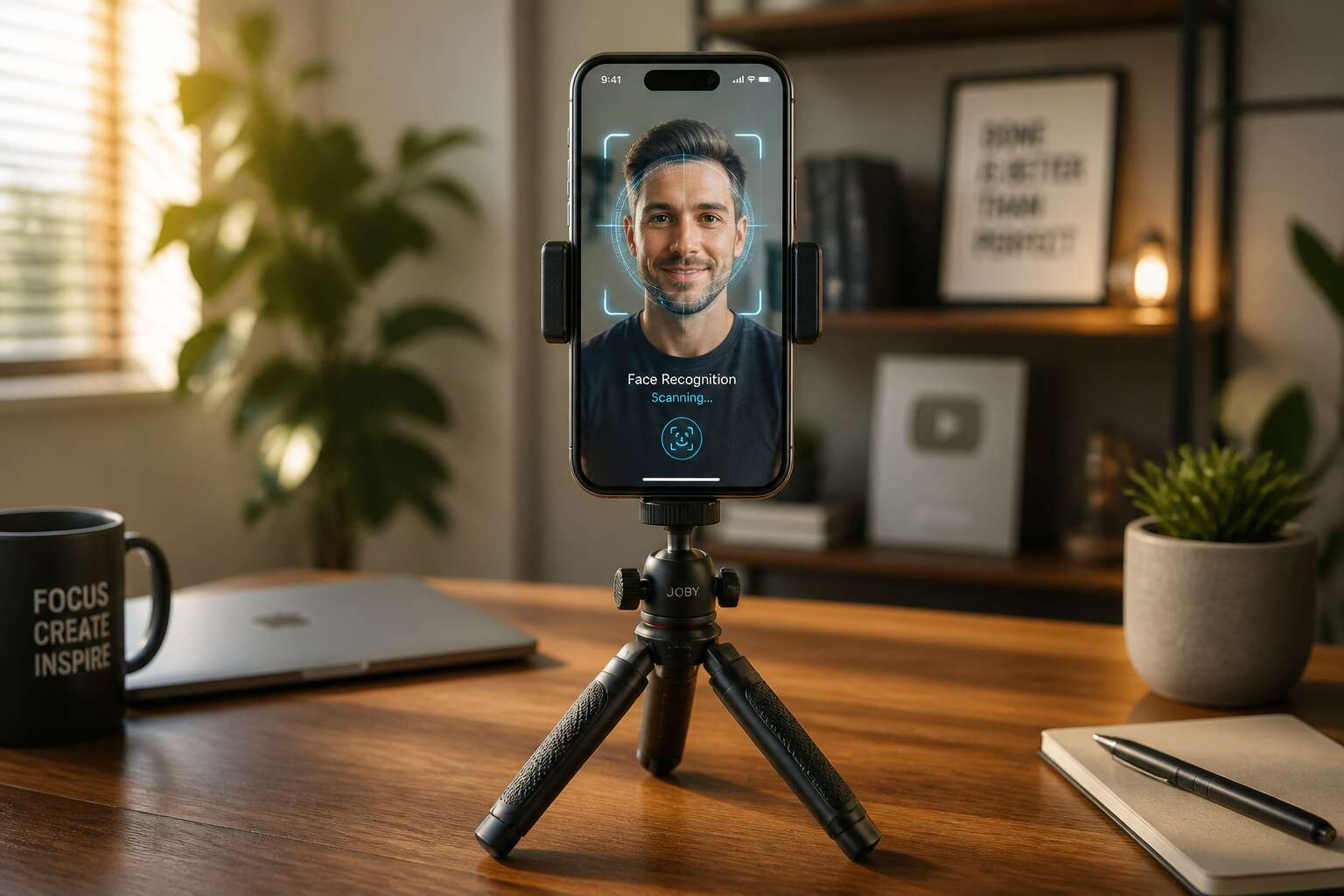
Understanding the Need for a Tripod in Facial Recognition
The Role of Stability in Face Detection Accuracy
The human hand can thread a needle and peel an orange, but it cannot hold an iPhone motionless for a face scan. The resulting blur is not a quirk. It is a direct cause of failed authentication.
A facial recognition tripod for iphone locks the device in place, eliminating micro-shifts that confuse depth mapping algorithms. When the camera stays put, software matches facial geometry instead of compensating for shake.
Consider an unstable scan:
- The frame rate drops as stabilisation kicks in.
- Focal points wander across the face.
- Shadows shift with every fraction of a degree of tilt.
None of that occurs with a fixed base. The facial recognition tripod for iphone separates a successful scan from a stubborn lock screen. Load shedding in South Africa already makes life difficult. A wobbling iPhone should not compound the problem.
Key Use Cases: Security, Photography, and Accessibility
The average South African checks their phone 85 times a day. Each glance can demand a face scan for authentication, yet the conditions for that scan are rarely perfect. A facial recognition tripod for iphone addresses a simple truth: the camera and the subject both need to be still. This need extends beyond unlocking a device. It reaches into security verification, into creative work, and into the daily routines of people who rely on their phone for fundamental tasks.
When identity verification fails because of motion blur, the consequences are delays and frustration. A stable base is the remedy.
– Banking app verification requires a precise scan of facial features.
– Government services, like tax returns, now use biometric checks on mobile devices.
– E-commerce transactions often demand a live facial confirmation.
For photographers, the same tripod serves a dual purpose. Capturing a portrait in low light at a rural wedding, or attempting a self-timer group shot during a family gathering, the phone needs to remain fixed. A facial recognition tripod for iphone ensures the camera focuses on the subject, not on correcting the photographer’s tremors. The result is a sharper image and a scan that actually works.
Accessibility is another layer. For a person with Parkinson’s disease or for an elderly user with unsteady hands, holding a phone still for a scan is a daily struggle. A tripod provides a stable platform, returning independence to the user. It transforms a frustrating interaction into a reliable process. The utility is not about fancy features; it is about the quiet dignity of a task completed without assistance.
How a Tripod Improves Consistency for Face ID Scanning
Your face constantly changes. Smile, frown, get a haircut, gain weight, and Face ID has to keep up. It handles those changes, but it cannot handle a phone that moves during the scan. A facial recognition tripod for iphone keeps the camera still, giving it a stable view of your features.
Consistency matters because Face ID builds a model from each successful scan. If every attempt happens at a different angle, the data becomes contradictory. A tripod removes that problem.
- Eliminates micro-shaking that blurs the depth map
- Keeps the distance between face and camera constant
- Ensures the same angle every time
That reliability is the difference between a quick cash transfer and an awkward parking lot routine where you tilt, squint, and try again. A tripod doesn’t make you prettier. It makes you predictable, and Face ID loves predictable.
Comparing Handheld vs. Tripod-Mounted Facial Recognition
Holding your iPhone steady for Face ID works, but it asks a lot of your arm and patience. A facial recognition tripod for iPhone changes the game by letting you step back, adjust the height, and let the phone come to you. Handheld setups force you to lean in awkwardly, especially if you’re sitting low or standing in uneven light. The tripod also lets you rotate the phone slightly to catch better side lighting, which helps the TrueDepth camera see your face clearly without you tilting your neck.
Consider what else improves when both hands are free:
- You can hold a child or a pet while unlocking.
- You can position the phone at a natural eye level for tall or short users.
- You can keep a consistent distance for repeated scans during setup.
That hands-free advantage matters more than you’d think. Handheld is fine for a quick check, but tripod mounted turns Face ID into a reliable tool for longer sessions, like video calls or secure sign-ins. You stop compensating for the phone; the phone compensates for you.
Key Features to Look for in a Tripod for iPhone Facial Recognition
Adjustable Height and Tilt for Optimal Camera Angle
When you mount your iPhone on a facial recognition tripod for iphone, the height adjustment is not a luxury. It’s the difference between your face looking like a passport photo from 1998 and something the camera can actually read. If the lens sits too low, your chin becomes the protagonist. Too high, and you’re presenting your nostril to the sensor. Both are terrible for a face ID scan.
Look for a center column that extends smoothly. A crank or a twist lock helps you dial in exactly the right position. Tilt is equally simple:a ball head or a three way head lets you aim the camera angle without loosening everything else. The goal is to have the lens perpendicular to your face, with your eyes in the upper third of the frame. That’s the sweet spot for consistent results.
What to check before buying:
- Height range: moet cover from three feet to six feet, because humans come in varied sizes.
- Tilt range: at least 30 degrees each direction.
- Locking mechanism: something that won’t creep during a long session.
Ignore flashy extras. You need a tripod that holds its ground and adjusts without a wrestling match. That will make your facial recognition tripod for iphone worth every rand.
Remote Control Compatibility for Hands-Free Operation
Nothing kills a Face ID scan quicker than a trembling thumb! A facial recognition tripod for iPhone removes the shake, but remote control compatibility decides whether you stay hands-free during the capture. The best units pair with Bluetooth remotes or the Apple Watch, triggering the scan without touching the screen. That matters for security booths and accessibility work, where a hand entering the frame ruins the match.
Remote control compatibility varies by model. The features that matter:
- Bluetooth Low Energy support, so the remote does not drain your battery
- A trigger that works from five meters away, since you will not always stand beside the tripod
- Direct mapping to the volume buttons, the native shutter command
- No proprietary app, because Face ID reads best through the standard camera feed
Some tripods also respond to Siri voice commands. In my experience, hands-free operation transforms a basic stand into a dependable facial recognition tripod for iPhone in clinics and studios. A failed trigger means repeating the scan.
Secure iPhone Mounting for Different Models
A facial recognition tripod for iPhone stands or falls on its mounting system. The clamp must secure a range of devices, from the compact iPhone SE to the heavier Pro Max, without wobble or pressure marks. This holds true even when you switch models, since newer iPhones arrive with different width and weight profiles.
Key features separate a dependable cradle from a frustrating one:
– An adjustable jaw width with a threaded or spring-loaded mechanism
– Silicone-lined grips that respect the aluminium frame
– A twist-lock collar that prevents slow slippage during repeated scans
– A release button that lets you swap phones quickly between sessions
Rubber padding matters more than people expect. Without it, vibration transfers straight into the phone, and Face ID’s dot projector catches micro-movements. The mounting plate also needs a snug fit against the tripod’s screw head, using either a 1/4-inch thread or a dedicated quick-release base. Different models carry different weights, so a clamp that handles both ends of the spectrum without shimming is worth the extra cost.
Stability and Build Quality for Long-Term Use
There is a quiet cruelty in cheap metal. It gleams on the shop floor, polished and promising, yet within months it succumbs to a slow, shameful fatigue. The hinges loosen. The legs wobble. The once-proud column begins to tremble like a hand caught in a lie. For anyone who relies on a facial recognition tripod for iphone, this decay is not an inconvenience; it is a betrayal.
The first thing to scrutinise is the material. Cast aluminium offers a reasonable balance of weight and resilience, but it can develop hairline fractures under repeated stress. Magnesium alloys are lighter, yet they corrode in coastal air, which matters along the Cape shoreline. Carbon fibre, though costly, shrugs off both moisture and vibration, making it a worthy companion for the long haul. Steel, in its various grades, remains the old sentinel: heavy, dependable, and indifferent to the years.
Pay attention to the joints. A twist lock that catches even slightly, or a lever that snaps shut with too much force, will eventually wear against the leg sections. The finest tripods use brass bushings or hardened steel inserts at these pivot points, because that is where the structure decides its own fate. A facial recognition tripod for iphone endures countless micro-adjustments over its lifetime, and each one places a small tax on the mechanism. Quality engineering simply postpones the reckoning.
Ground contact deserves equal scrutiny. Rubber feet grip smooth tiles but turn treacherous on wet grass or gravel. Spiked tips, reversible or otherwise, offer purchase on softer terrain. Some models include a central hook, which allows the user to hang a weight and lower the centre of gravity during a long outdoor session. This is not mere accessory theatre; it is a meaningful stabiliser when the wind grows insistent.
Consider the head as well. A fluid head or ball head with a solid locking mechanism will hold your iPhone at the precise angle required for facial recognition, without drooping mid-capture. Check for backlash, that subtle play between the head and the column. If the head shifts even half a degree when you release the lock, the entire setup is compromised. Precision here is not vanity; it is necessity.
Long-term use also demands attention to seals and gaskets. Dust and sand infiltrate unguarded mechanisms, turning smooth motion into gritty resistance. Some manufacturers offer weather-sealed collars and covers, which extend the life of the device considerably. Water ingress is the silent killer of all tripods, and one that is often discovered only after the damage has set in.
- Inspect the leg locks for smooth, consistent rotation before purchase.
- Look for replaceable foot pads and rubber inserts.
- Verify that the centre column does not wobble when fully extended.
- Check the load rating, and always exceed it by a comfortable margin.
- Examine the corrosion treatment on all exposed metal surfaces.
Finally, consider the weight you are willing to carry. A heavier tripod offers greater stability, but it will linger in your vehicle or on your shelf more often than it accompanies you. The finest facial recognition tripod for iphone is the one that remains with you, session after session, without complaint. It becomes a silent familiar, a three-legged sentinel that waits patiently while you compose the shot, and it never once betrays the trust you place in it.
Build quality reveals itself in performance, not promise. The initial heft and anodised finish matter little compared with how a facial recognition tripod for iphone performs a thousand sessions later, when the novelty has faded and only reliability remains. Choose accordingly, because in the end, the tripod is the one piece of equipment that sees everything and forgets nothing.
Portability and Fold-Down Design for On-the-Go Needs
Portability defines a facial recognition tripod for iPhone when you work across multiple sites. A fold-down design that collapses to under 12 inches fits into a daypack, and a weight under 500 grams keeps your shoulder happy. Twist locks compress neatly against the legs, while flip locks often snag on bag straps.
Check the leg sections: five sections fold smallest but require extra time to deploy. For fast setups, three sections strike the right balance. The head should tuck flat between the legs when folded, reducing the profile.
- Folded length under 12 inches
- Weight under 500 grams
- Quick-release locks
Test the collapse motion before buying. A smooth one-handed fold saves real time between shots. These details make the tripod a natural partner for on-the-go iPhone facial recognition.
Top Tripod Options for iPhone Facial Recognition
Compact and Lightweight Tripods for Travel
Most travel tripods trade rigidity for weight, a poor trade when your iPhone must stay still for facial recognition. A facial recognition tripod for iphone needs both. The Manfrotto PIXI EVO folds to 24cm and weighs 340g, yet its leg locks create a solid base. The Joby GorillaPod 3K offers flexible legs that wrap around railings or branches. Both let you position the phone at the correct angle without extra bulk!
Compare these features when choosing:
- Leg material: carbon fibre saves weight but costs more
- Head type: a ball head allows quick tilt adjustment
- Phone clamp: look for a lightning port cutout
For frequent flyers, the Ulanzi MT-08 extends to 145cm but packs down to 30cm. It weighs 320g, similar to a small water bottle. That portability means you will carry it, which matters more than any spec sheet. A facial recognition tripod for iphone should fit easily into your bag until you need it.
Desktop Tripods for Workspace and Studio Use
In the dim glow of a studio lamp, your iPhone must remain as still as a tombstone. Face ID demands precision, and a wavering hand brings only frustration. A facial recognition tripod for iphone turns chaos into ceremony, holding the device at the perfect angle while you move freely through your workspace.
For desktop use, choose a stand that combines rigidity with subtlety. The Manfrotto PIXI EVO offers aluminum legs and a fluid ball head, while the Joby GorillaPod 3K bends to embrace uneven surfaces. Consider these traits when selecting a facial recognition tripod for iphone:
– A clamp that does not obstruct the TrueDepth camera
– Rubber feet that grip polished wood or concrete
– A quick-release plate for effortless mounting
The best tripod vanishes into the background yet stands unyielding when the shutter calls. In South Africa, where load shedding interrupts workflows, a dependable stand keeps your setup constant. Let your iPhone rest, and let the recognition work in silence.
Full-Size Tripods with Advanced Pan-and-Tilt Heads
At full size, a tripod becomes a fixed structure in the room. The pan and tilt head lets you follow a moving subject without touching the phone. For a facial recognition tripod for iphone, this is the core requirement: the TrueDepth camera needs a smooth path while the face turns.
I worked with a fluid head on a Johannesburg set, and the friction control was everything. The drag turned with the exact pressure of the hand, equal in both directions. A full tripod with that head handles a face that is never still. The camera follows, waits, and returns.
The parts to check before you spend:
– The load rating of the head, not just the legs
– The arc of the pan handle and its lock position
– The mount plate that sits away from the front sensor
Hold the camera at eye height and let the head carry the change. The facial recognition tripod for iphone with advanced pan and tilt becomes the quiet centre of any shot.
Budget-Friendly Picks vs. Premium Professional Models
A fine facial recognition tripod for iphone does not need to empty your wallet, but the cheapest option will cost you in frustration. The budget pick must hold the phone rigidly, with a secure clamp that does not wobble when Face ID scans a moving head. I have seen a R300 tripod fail because its legs flexed on a wooden floor. Premium professional models use anodised aluminium and stainless steel screws, and the difference is tangible.
Here is what separates the spend:
1. The friction of the head, tested against your own finger pressure
2. The weight of the tripod, because a light unit tips over in a breeze
3. The rubber feet, which grip tile and carpet alike
Premium models add a counterbalance system for heavy phones. A facial recognition tripod for iphone in this class holds the TrueDepth camera steady for minutes at a time track a face through a full turn of the head. Budget options work, but they ask you to tighten every knob before each shot.
Setting Up Your Tripod for Optimal Facial Recognition
Positioning the iPhone at the Correct Height and Distance
The distance between your face and the lens influences how reliably Face ID registers your features. Most people assume closer is better, but the TrueDepth camera requires a specific focal range to map your face accurately. Position the facial recognition tripod for iPhone so the screen sits roughly forty to fifty centimetres from your eyes. This range lets the camera capture your complete facial contour without distortion from wide angle cropping.
Height alignment also determines scan success. The lens should meet your eye line directly, not point upward or downward at your chin. A common mistake involves setting the tripod at chest height and tilting it, which introduces perspective errors that confuse the depth mapping. Adjust the legs first, then fine tune the tilt so the phone is perfectly perpendicular to your gaze. When the phone rests stable and level, the sensor reads your face with consistency.
For shared devices, mark the ideal floor position with a small piece of tape. That way, every user knows where to stand for a smooth unlock every time.
Adjusting Lighting and Background for Better Detection
Once the facial recognition tripod for iphone stands level, assess the surrounding light. The TrueDepth camera reads infrared patterns, yet visible light still interferes. Strong overhead bulbs create deep shadows under the brow, confusing the face map. Soft daylight from a side window offers the most reliable condition. For rooms with artificial light, a diffuser or a sheet of paper over the lamp works well.
Adjust these lighting conditions for better detection:
- Reduce glare from nearby windows.
- Switch off coloured LED strips that shift colour interpretation.
Background noise matters too. A cluttered shelf or a television playing in the frame competes with your face for the camera’s attention. Keep the background plain and still. A neutral wall works best. When the background stays quiet, the facial recognition tripod for iphone completes its job in under a second. This holds true from a Sandton office to a cottage in the Karoo.
Configuring Face ID and Recognition Settings
Setting up the tripod is mechanical work. Configuring Face ID is the social etiquette half of the process. The TrueDepth camera learns your face as it normally appears. Remove sunglasses, wide-brimmed hats, or scarves that cover the jaw before enrolment.
When you scan your face initially, hold the iPhone at the same distance your facial recognition tripod for iphone will maintain during actual use. I have watched people hold the device at arm’s length, then wonder why the system stumbles later. The Alternate Appearance feature covers changes like new glasses or a different beard style.
Use these settings for a clean configuration:
- Open Settings and tap Face ID and Passcode.
- Enrol an Alternate Appearance for seasonal changes to your look.
- Leave Require Attention enabled unless reflective eyewear interferes.
Your facial recognition tripod for iphone then behaves predictably, whether it stands on a desk in Century City or a farmhouse table in the Free State.
Testing the Setup with Different Facial Angles
A tripod that looks level often isn’t. I have spent hours chasing Face ID rejections that traced back to a base plate sitting on an uneven surface. The fix takes thirty seconds.
Set the facial recognition tripod for iphone on a stable table, then test how the camera reads your face from different facial angles. Look straight ahead for the baseline, then rotate your head slowly. Most iPhone models accept a turn of roughly 20 degrees before they demand a re-scan.
- Straight on for the initial mapping.
- Left and right at 20 degrees.
- Chin lifted and dropped slightly.
Run this sequence before you trust the mount for security use. In my experience, a facial recognition tripod for iphone that handles these angles will handle the rest of your day.
Troubleshooting Common Setup Errors
When you set up the facial recognition tripod for iphone, the initial tension on the swivel governs the entire session. An uneven base plate leaves a skewed line. Tighten the shoulder joint twice, and verify the smartphone mounts flush in the cradle. That routine solves half the fails I see.
The errors originate from the head assembly as often. A loose drag grip lets the capsule sag, pulling your face out of the desired plane while the scan initiates. Treating a mechanical looseness as a software defect is the classic misstep. Check the sequence here:
- Secure the single plate with equal pressure on both springs.
- Lock the tilt advance after aligning the lens with your eyes.
- Deploy the third leg fully to the floor.
Once these actions are complete, the facial recognition tripod for iphone stops being a variable. It holds steady, letting Face ID read the exact same geometry each time. That consistency turns a recurring rejection into a single, smooth welcome.
Tips and Best Practices for Using a Facial Recognition Tripod
Maintaining Consistent Distance for Reliable Scanning
Face ID tolerates only a narrow depth band. Step too close and the nose flattens; lean back and the eyes lose sharpness. A facial recognition tripod for iphone holds the phone fixed at that optimal 25 to 45 centimeter window, meaning the depth map stays uniform across every scan. This consistency matters more than lighting in most cases.
Mark the floor where the tripod stands. If the legs shift, even by five centimeters, the scan geometry changes. Use the tripod’s center column to adjust height rather than moving the whole unit. Keep the same chair position during repeated unlocks.
A simple routine prevents failed attempts. Place the tripod, sit, then let the phone do the work.
Adapting to Different Environments and Lighting Conditions
South African sunlight changes character between morning and afternoon, and indoor lighting can be just as fickle. A facial recognition tripod for iphone helps you adapt without losing scan accuracy. Instead of chasing the light, adjust the phone’s angle or move the tripod to a shaded spot.
When working near a window, close the curtain partially to soften harsh shadows. In a dim room, position a small lamp behind the tripod, not directly at the lens. The TrueDepth camera needs even illumination across the face, not a spotlight.
- Use a matte screen protector to reduce glare in bright conditions.
- Place the tripod on a stable surface away from air vents that cause subtle vibrations.
These small adjustments keep the facial recognition tripod for iphone reliable whether you are in a Cape Town office or a Johannesburg studio.
Cleaning and Maintaining Your Tripod and iPhone Lens
Dust gathers silently. One morning the facial recognition tripod for iphone fails to read your face, and the culprit is not the algorithm but a smudged lens. I clean the iPhone camera with a microfiber cloth every few days, moving in small circles. The tripod’s joints also collect grime.
Check the legs and locking mechanisms weekly. A loose hinge introduces micro-movements. That movement becomes a failed scan.
- Wipe the lens with a dry microfiber cloth. No solvents.
- Blow out dust from the tripod’s hinges using compressed air.
- Tighten any screws that feel loose.
Keep the facial recognition tripod for iphone in a dry bag when not in use. Humidity dulls the mirror finish and weakens the plastic over time.

0 Comments