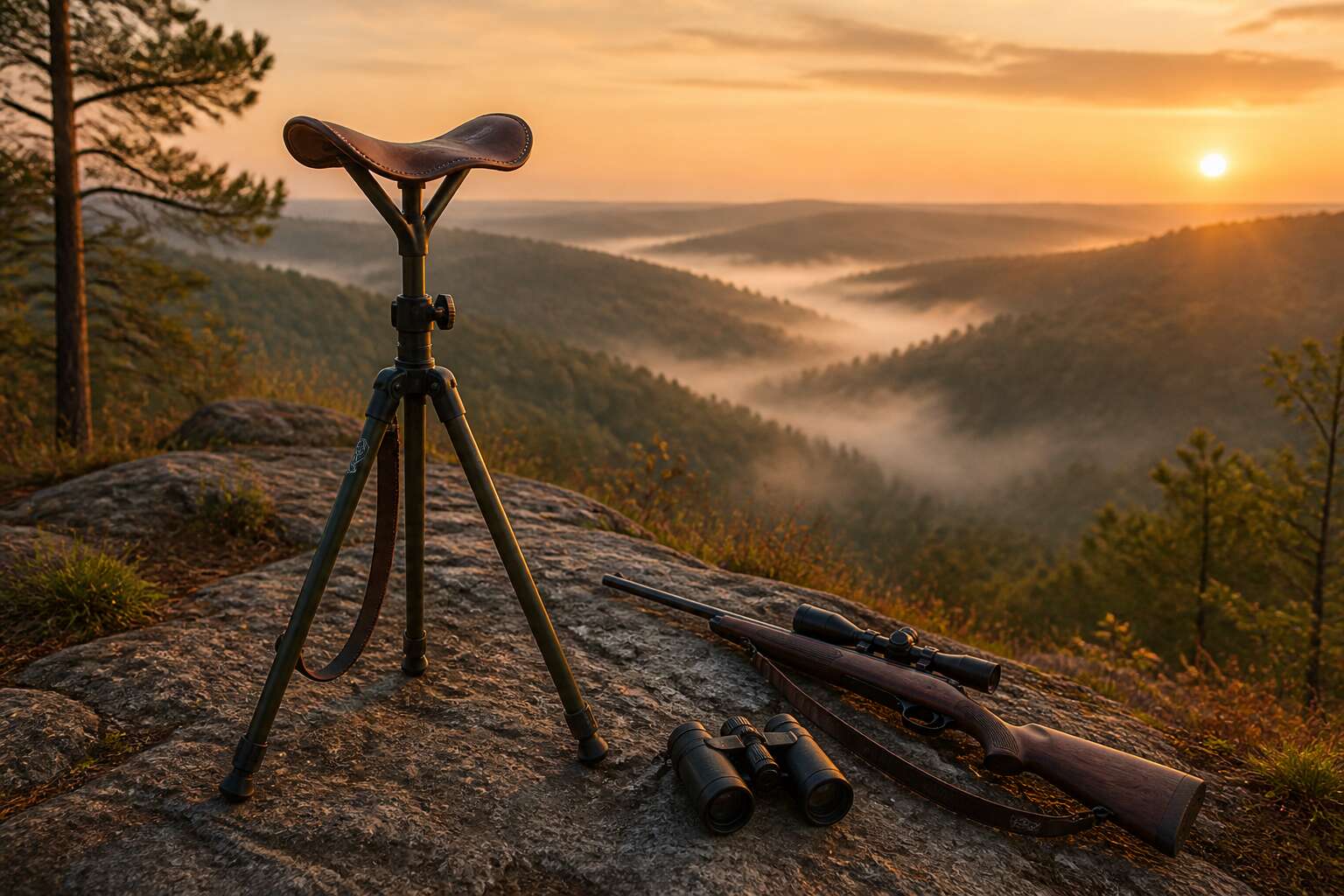
Why a Shooting Stick Tripod Beats a Traditional Bipod
The Advantage of Three Points of Contact for Stability
Three points of contact form a stable triangle; two points form an unstable line. For anyone searching for a shooting stick tripod near me, this distinction matters on uneven ground, where bipod legs often rock. The tripod’s third leg absorbs that imbalance, keeping the rifle level while you settle into the shot.
Traditional bipods demand a flat, stable surface. In the field, that condition rarely exists. A tripod adapts to rocks, fallen branches, and slopes. One leg adjusts independently, so the rifle’s center of gravity stays under control. I have watched shooters struggle with a bipod on a hillside, and the tripod simply removes that frustration!
Reducing Fatigue During Long Hours in the Field
Hunting from a bipod means lying prone for long stretches. That position eventually strains the neck, and the arms lock up holding the rifle steady. I remember a long afternoon on the Karoo flats where my shoulders were burning long before sunset. A shooting stick tripod near me lets you stand or sit in a natural posture, so the weight rests on the frame instead of your muscles.
Consider what a tripod saves you over six hours in the veld:
- Less lower back tension from crouching
- Steadier aim when your hands are tired
- Faster repositioning after a missed shot
The tripod also reduces micro-adjustments. Every time you shift position with a bipod, you reacquire the target. With a tripod, you make one small tweak to the leg and settle again.
Versatility Across Uneven Terrain and Shooting Positions
The Karoo is rarely flat. One moment you are glassing from a rocky ridge, the next you are tucked into a dry riverbed with the angle working against you. A bipod demands a level surface. The tripod simply adjusts! Each leg moves independently, so you can plant on a slope without fighting the rifle.
That versatility extends to how you shoot. From behind a low bush, you can kneel. On an open rise, you can stand. The trigger hand stays relaxed because the frame holds the weight. A quick search for a shooting stick tripod near me will show options with adjustable legs and swivel heads, but the principle stays the same: three legs that conform to the ground, not the other way around.
Key Features That Separate a Quality Shooting Stick from a Cheap One
A bipod attaches to the rifle. That means the rifle’s weight and the shooter’s pressure go through the same frame. A shooting stick tripod near me found on the market lets you rest the rifle independently. The result is a quieter, more stable platform for follow-up shots.
Quality matters. Look for these features:
- Clamp-style or V-yoke heads that hold the stock securely
- Leg locks that engage with a firm twist, not a wobbly thumb screw
- Sandalled feet or rubber tips that grip the Karoo gravel
A cheap stick flexes under load. A quality one does not. The difference shows in the groups you print downrange.
Where to Shop for a Shooting Stick Tripod Locally
Independent Gun Shops and Sporting Goods Stores
There is a certain honesty in buying a shooting stick tripod near me from a person who will see you again. Independent gun shops across South Africa stock what their regulars demand. The curation comes from experience, not a corporate buyer. You can hold the leg locks, test the collar tension, and ask whether the yoke suits your calibre. That conversation is worth something.
Sporting goods stores in the larger centres also carry these rests, often with a range of models out on the floor. The staff might not hunt, but they know what sells. Both options let you inspect the build before you commit. When the distance between you and the animal is measured in metres, the gear you carry matters.
Hunting and Outdoor Specialty Retailers
Hunting and outdoor specialty retailers operate differently. The person behind the counter has field experience, with a skinning knife on their belt and a story about a missed kudu. When you search for a shooting stick tripod near me, these outlets deserve priority because they test every product they sell.
A specialist will ask about your rifle, your typical shooting distance, and whether you prefer a seated or prone position. They fit the yoke to your stock and adjust the collar tension on the spot. They might take you outside to test the leg spikes on compacted soil.
Details worth inspecting include:
- The leg lock mechanism engages with a firm click and releases cleanly
- The total weight when folded
Spare parts sit on the shelf behind the counter. Replacement feet, locking collars, and yokes for different calibres are on hand. You leave with a system that matches your exact setup.
Big-Box Stores with Hunting Sections
Big-box stores with hunting sections fill a specific slot in the market. They are open later, stock the mainstream brands, and offer a return policy that beats most independent shops. When you are comparing a shooting stick tripod near me, these outlets let you handle several models back to back without a salesperson counting your minutes. You can extend the legs, feel the lock mechanism, and walk away if nothing clicks.
The catch is expertise. The staff member who points you to the tripod might also stock swim goggles. They know the system, not the field. But if you already did your homework, the big-box store becomes a fast, low pressure way to buy. Just confirm the return window before you hand over cash. That is a safety net worth the trip.
Farm Supply and Tackle Shops That Carry Outdoor Gear
Farm supply stores and tackle shops occupy a different corner of the market. They serve people who spend long hours outdoors, and their shelves reflect that. When you search for a shooting stick tripod near me, these outlets often appear in small towns where the counter staff know the local terrain firsthand.
The selection is usually narrower than a dedicated gun shop. You might find one or two models, often sturdy units rather than carbon-fibre competition sticks. That can be enough. These stores stock gear that survives hard use, because their regular customers demand it.
Expect a few practical options:
- Tripods with rubber feet for slick rocks
- Simple twist locks that need no tools
- Cords and spare parts on a rack by the counter
You will not get a long sales pitch. You will get a straight answer about whether it holds up in the veld.
Using Online Store Locator Tools to Find Stock Nearby
Ninety percent of shoppers abandon an in-store search within ten minutes, yet a shooting stick tripod near me can surface with a single online query. Store locator tools, when used honestly, reveal what actually sits on the shelf. They cut through the noise of general web results and point you to a dealer with verified stock.
Enter your town or postal code first. Then narrow the radius to something walkable or a short drive. Most hunting retailers update these tools daily, but a phone call remains the final filter.
- Add the brand name, such as Z-Pro or Bushnell
- Check for pickup options, not just delivery
- Ask if they will hold the item for 24 hours
A locator is a starting point, not a promise. The dusty shelves of a Barberton hardware store might hold a better bargain than a premium chain. The same shooting stick tripod near me search that worked in Johannesburg could fail in Musina. Use the tool, then trust your boots.
How to Compare Materials and Build Quality at a Physical Store
Aluminum vs. Carbon Fiber vs. Wood: Pros and Cons
In my hands, spec sheets never tell the truth. The real test happens when you grip the shaft in a shop. For a shooting stick tripod near me, hands-on comparison reveals what photographs hide. Aluminum feels cold and stiff, good for budget hunters but unforgiving in winter. Carbon fiber offers lightness and reduces recoil, though it costs more. Wood warms the palm with tradition, yet its weight taxes your shoulder after miles.
- Aluminum: cheap, rigid, transmits temperature.
- Carbon fiber: dampens vibration, ultra-light, costly.
- Wood: classic, heavy, needs sealing.
Walk into that store. Twist every twist-lock. Feel the flex. Your tripod should match your terrain, not the brochure. Trust the tactile evidence!
Checking the Locking Mechanisms and Leg Adjustability
Seventy percent of tripod failures trace back to loose locks, not broken legs. That stat alone justifies a hands-on session. When you find a shooting stick tripod near me, grab the leg and twist every twist-lock with force. A quality lock engages with a crisp click. A cheap one wiggles or binds.
- Extend each leg one section at a time. Listen for grinding.
- Lock and unlock each joint ten times. Feel for consistency.
- Test the foot spikes on a hard surface.
Leg adjustability matters as much. Flip the levers and slide the sections. They should move smoothly with no sudden sticking. Try adjusting with one hand, since your other hand often holds a rifle. The whole process reveals flaws no spec sheet exposes. Trust your fingers, not the packaging.
Assessing Weight Capacity and Overall Durability
At a physical store, the listed payload rarely tells the full story. The real test comes from lifting a shooting stick tripod near me and feeling how the sections distribute weight. I press my palm on the top platform, applying a simulated rifle load. Does the joint flex? A quality unit holds firm; a bargain model sags and grumbles.
Assessing materials involves more than a glance. Run your fingers along the tubing to feel for thin spots or rough machining. Check the welds at the junction points for porosity or missing penetration. The hardware, screws and bolts, should be torqued cleanly with no stripping.
I always perform a simple brute force test:
- Grip the legs and try to twist them counter to each other.
- While pressing down, look for lateral wobble in the head.
- Shake the whole unit sideways to listen for rattling parts.
That reveals the true rigidity, the kind of build that survives a season of thorny veld. Durability means the entire system compresses into a load-bearing tool, not a wobbly toy. The store environment lets you exercise that judgement before you commit to an outdoor purchase.
Hands-On Testing Tips Before You Buy
How to Test the Height Range for Standing and Seated Positions
A shooting stick tripod near me taught me that spec sheets lie. Test the height range before you buy. Stand with your rifle unloaded and adjust each leg to its fullest extension. The platform should sit just below your forearm. Then drop to a seated position on a cooler or the ground. The lock must hold firm at every click.
- Press down hard on the top at maximum height.
- Repeat the press from a seated position.
- Check your wrist angle at both extremes.
Correct angles mean zero strain. A creaking leg or a slipping collar signals trouble. Your local dealer for a shooting stick tripod near me often lets you test on pavement, which mimics field conditions. Take that chance, because a cheap stick fails exactly here.
Simulating a Field Rest by Pushing Down on the Stick
Most hunters discover the truth about a rest only when they lean into it with a loaded rifle. The parking lot test matters. Find a shooting stick tripod near me at a local dealer, then treat it like the field. Push down hard on the platform, not gently, but with real weight. Shift your body sideways. Rock the stick forward and backward.
A quality tripod absorbs pressure without flexing at the collar joints and returns to its original stance. Watch the feet. They should grip the pavement, not slide. Take a round object, a pipe or a branch, and rest it across the platform to simulate a barrel. Push down with increasing force. Listen for creaks. Check for leg slippage at each click point. A dealer who sells this gear will expect you to test it. If they hesitate, walk away.
Verifying the Cradle and Clamp Fit for Your Rifle or Scope
Before you search for a shooting stick tripod near me, remember that the cradle is the only contact point with your rifle. A mismatch ruins the whole system. In the shop, seat your rifle in the cradle, then pick up the entire tripod by the stock. If the cradle slips or the rifle rotates in the clamp, set it aside. That test reveals more than any spec sheet.
I bring the exact scope and barrel profile I plan to use. A thicker objective bell changes how the rifle sits. So does a heavy barrel. Check that the cradle’s jaws open wide enough for your fore-end and close firmly around a bare barrel. Ask the dealer who stocks a shooting stick tripod near me about spare cradle inserts.
- Cycle the bolt with the rifle locked in the cradle. Binding means trouble.
- Test the release latch with one hand, because your other hand holds the rifle.
A cradle lined with soft polymer grips better than hard plastic but collects dirt. Watch the rifle when you shift weight. If the muzzle drifts, the cradle is too shallow. Proper fit means the rifle stays put when you remove your hand.
Asking Store Staff for a Live Demonstration and Recommendations
Nobody walks into a shop and mounts their rifle on a display model without raising an eyebrow. Yet the staff at a decent dealer expect exactly that. When you find a shooting stick tripod near me, ask for a live demonstration, not a sales pitch. Watch how the legs lock when the staff torques the pan head. See if they adjust the height with one hand or two. Ask what they recommend for a heavy barrel or a large objective bell. Watch for three things:
- How the cradle holds your fore-end when the rifle is rotated from side to side.
- How the leg locks behave when the tripod is loaded.
- How easy it is to level the pan head on uneven concrete.
Bring your own rifle, because a store demo with a lightweight varmint gun tells you nothing about your 4.5 kg hunting rig. If the staff hesitates, walk out. That hesitation is the most honest answer you will get.
Building a Relationship with Your Local Outdoor Retailer
Benefits of Buying Near You: Immediate Returns and Expert Advice
One dealer in Mpumalanga told me that half his daily work is fixing what online orders break. That is why a shooting stick tripod near me should come from a counter you can revisit. Immediate returns are the quiet promise of a local transaction. A cracked clamp or stripped thread gets swapped in minutes, not after a courier delay.
The advice is sharper too. That seller has watched your province’s wind patterns ruin careless bipods and knows which locking collar survives the red dust. You are not a ticket number. You are a regular whose phone number they recognise.
- Replace a broken foot spur before the next morning’s hunt.
- Get a hands on lesson about tension settings for your rifle weight.
Building that relationship means your gear questions get honest answers.
Connecting with Local Hunting Clubs and Shooting Ranges for Tips
Buying a shooting stick tripod near me from the same face twice changes the transaction. The third time, you skip the sales pitch. The dealer knows your rifle, your shooting style, and your habit of dropping gear into muddy riverbanks. He points you to the secondhand bin before you ask.
Hunting clubs and shooting ranges trade in valuable intelligence. The useful kind. The kind that tells you which slope swallows tripod legs. One conversation at a braai can save you from buying a stick that collapses under pressure.
When you meet local shooters, ask:
– Which locking collars survive the red dust
– Which range officer lets you test a tripod at odd hours
– Which brands come back for repairs most often
Show up consistently. That network outperforms any online review, and it makes your next shooting stick tripod near me a smarter purchase.
Unlocking Exclusive Deals and Early Access Through Regular Patronage
Patronage at a local outdoor retailer works in subtle ways. The staff remember who tests gear seriously and who merely browses. I have watched this dynamic play out at my own local shop. Regular visits, even without purchasing, build a rapport that surfaces when a demo model gets discounted or a new shipment arrives early. Ask about their own field experiences with a shooting stick tripod near me, and they will often share details that never make it to the shelf label. That conversation alone can prevent a poor purchase. Over time, regulars gain:
- First refusal on trade-ins and returned demo units
- Early notice of stock arrivals before online listings update
- Honest assessments of durability based on local conditions
Loyalty here is practical. It unlocks access, not favours. Show up often enough, and the counter staff will treat your preferences as a standing order.

0 Comments