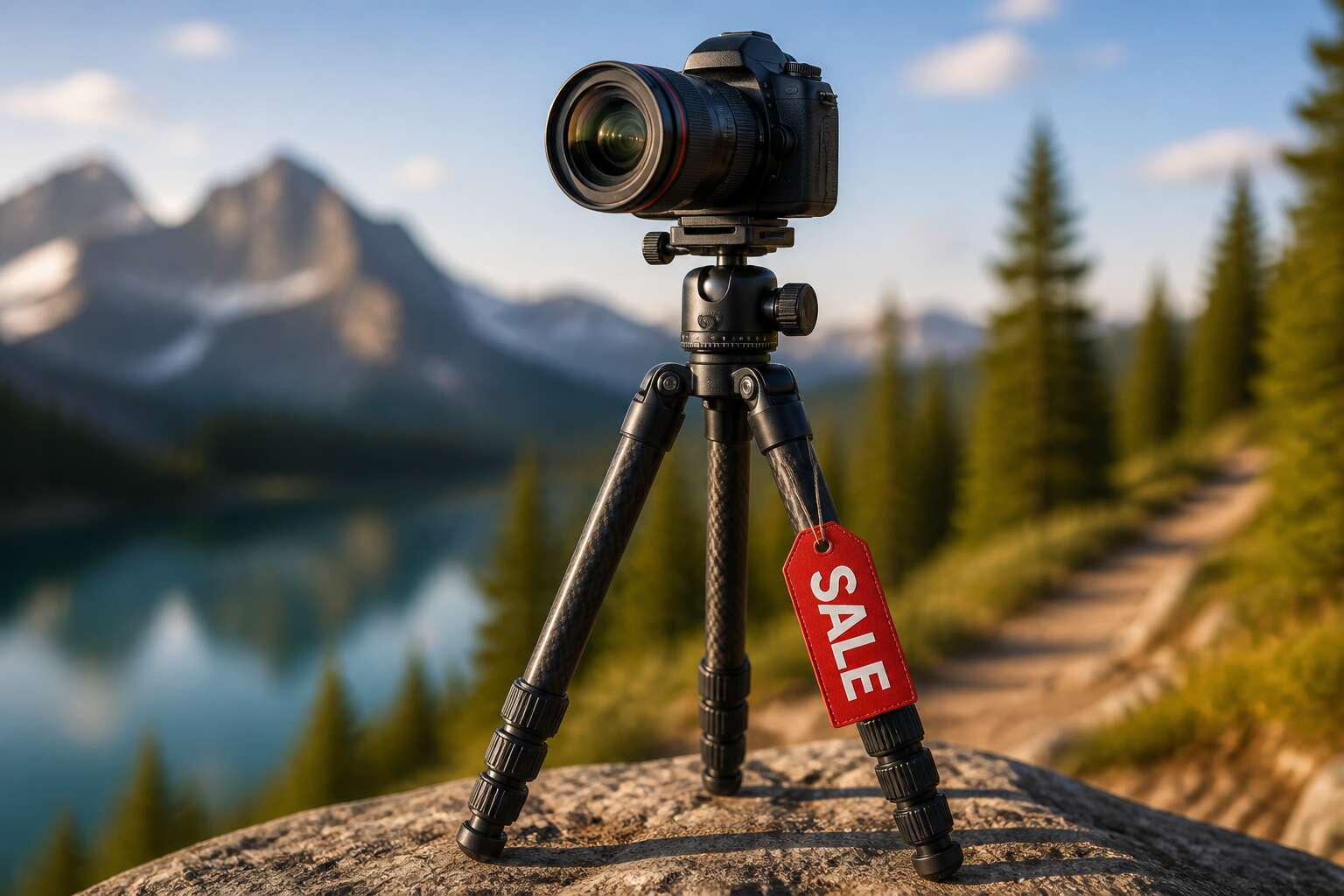
Why You Should Consider a Tripod on Sale
Save Money Without Sacrificing Quality
A tripod on sale can feel like a gamble, yet the odds shift in your favour when you know what to examine. In my early years, I ignored every discount, fearing hidden flaws. Then I learned that retailers often drop prices on perfectly sound stock to clear space for new models. This is your chance to secure a sturdy support system without draining your budget.
Look closely at these details:
- Build material holds weight against your heaviest lens
- Locking mechanism turns smoothly with no wobble
- Centre column height reaches your natural eye level
One tripod on sale I purchased has carried my gear through countless shoots across the Karoo. The reduced price never meant reduced performance. You simply need patience and a sharp eye to separate true savings from false bargains.
Great for Beginners and Pros Alike
Most photographers I know spend a small fortune on glass, then prop it on a wobbly $20 special. That is a recipe for heartbreak. The truth is, a tripod on sale can be the smartest purchase you make all year, whether you are shooting your first wedding or your fiftieth campaign.
For beginners, the appeal is obvious. You are still figuring out composition, lighting, and sharp focus. A shaky support sabotages all three. A discounted model from a reputable brand removes that variable without chiding your wallet. You learn proper technique on gear that behaves, which is more than half the battle.
The benefits extend far beyond your early days:
– You free up capital for better lenses or a remote shutter release.
– You experience professional stability without the professional price tag.
– You have a backup unit if your primary rig decides to fail mid-shoot.
– You leave room in the budget for a proper head, which changes everything.
For seasoned professionals, the calculation shifts. You know what you need, and you recognise value. A tripod on sale at a reputable dealer is often a discontinued color or a packaging refresh. The metal, the locks, and the legs are identical to last month’s full price unit. Finding one of these is a minor victory worth celebrating over coffee.
I have lost count of how many working shooters I know who fill their kits with these finds. They use them in the field with zero hesitation. The money saved goes toward a padded strap or a new flash, items with actual profit potential. The tripod itself simply works, and that is all you want on a Tuesday afternoon when the light is perfect. A good deal is a force multiplier, and plenty of veterans have portfolios built on the back of one.
Seasonal Sales and Clearance Events
Ask any Durban landscape photographer when they bought their best support, and the answer often involves a tripod on sale from a store clearing last quarter’s stock. The South African retail calendar has rhythm. January’s post-festive slump pushes dealers to move slow items, while July’s stock take creates space for new arrivals.
- Wait for the winter clearances in June and July.
- Watch for brand refresh cycles after trade shows.
- Check outdoor equipment shops in early spring.
I have seen the same model sit at full price for months, then drop sharply during a clearance event. These events are not about damaged goods. They are about inventory turnover. A tripod on sale at a registered dealer carries the same warranty as a full price unit, and clearance stock moves fast!
Different Types of Tripods to Look For
Travel Tripods: Lightweight and Compact
A travel tripod folds small, slips into a daypack, and still holds steady when wind picks up. For photographers who hike, this is the essential. Many models use carbon fibre to cut weight, though aluminium offers a budget alternative. When you find a tripod on sale, check the folded length first. A leg that collapses to 40 centimetres makes a difference. Consider these factors:
- Maximum height without centre column
- Ball head weight capacity
- Reversible centre column for low angles
Travel tripods often sacrifice stability for portability. That trade is acceptable when you carry it for ten kilometres. Look for twist locks over lever locks, they resist sand and grit. A tripod on sale can be a quality piece, but test the leg tension before committing. The best ones feel solid despite their size.
Studio Tripods: Heavy-Duty Support
Shifting focus from featherweight travel companions, the studio tripod is a different beast. Heavy-duty aluminium or steel legs lock into place with a satisfying thunk. They are built to hold a medium format camera and a heavy lens without a tremble. For portrait or product photography, this is the central pillar of your rig.
Look for a geared centre column for micro-adjustments and spike feet that bite into carpets.
- Maximum load rating is non-negotiable.
- Large, milled knobs provide grip even with gloves.
- A reversible centre column adds vertical flexibility.
When you spot a tripod on sale that weighs over five kilograms, do not dismiss it as outdated. That heft is the essence of its purpose. A tripod on sale for studio work should feel like a fixture, not a hiking stick.
Tabletop Tripods: For Creative Angles
Place a camera on a tabletop tripod and the world tilts. You are no longer documenting from a standing height. You are kneeling at the level of a coffee cup or a child’s face. This is where the ordinary becomes monumental.
Tabletop tripods are small enough to slip into a coat pocket but sturdy enough to hold a full-frame body steady. The trick is in the legs. Look for models that splay wide, allowing you to drop the camera to within centimeters of the floor. Some offer independent leg angles, which expands the positions you can achieve:
- Macro work with a 90 degree tilt
- Overhead flat lay shots
- Low angle tracking without a rig
When you spot a tripod on sale that fits in your palm, do not assume it is a toy. That small footprint unlocks these perspectives.
Flexible Tripods: Wrap Around Anything
Flexible tripods coil around tree branches, fence posts, and balcony railings with equal ease. This is the tripod for the photographer who finds angles where no flat surface exists.
The design is simple. Each leg is a series of ball joints wrapped in rubber. You bend them into position, and they hold. I once strapped one to a street lamp and walked away with a clean overhead shot.
When you spot a tripod on sale with segmented legs, pay attention. These are not gimmicks! They solve attachment problems for urban and nature shooters alike.
Consider these attachment points:
- A signpost on a hiking trail
- A park bench backrest
- A tree fork at eye level
Grip strength varies by model. Cheaper versions slip under heavy lenses. Rubberised coatings and metal cores indicate a reliable build.
Essential Features to Evaluate Before Buying
Load Capacity and Stability
A tripod that shudders in the breeze is a paperweight. When you see a tempting tripod on sale, the advertised price tag can easily distract you from the engineering that actually matters. Load capacity is the first number to scrutinize, because it represents the maximum weight your camera setup can rest on before the head starts sagging or the legs buckle. If you are using a heavy telephoto lens for wildlife or a full-frame body with a battery grip, you need headroom. A good rule of thumb is to choose a unit rated for at least 1.5 times the total weight of your gear. This ensures the friction locks hold firm and the ball head moves smoothly without creeping.
Stability, however, goes far beyond a simple weight limit. It is about the ground connection and the leg construction. For the variable terrain in South Africa, from the rocky slopes of Table Mountain to the sandy beaches of Durban, the leg material and locking mechanism are vital. Carbon fibre offers better vibration damping than aluminium, which is a significant advantage in coastal winds. The leg locks also deserve a hands-on test. A twist lock that jams is just as bad as a lever that snaps. Check the spread angle, too. A wider stance provides a lower center of gravity, which is a lifesaver when you are shooting in gusty Highveld conditions. Here is what to inspect physically before you commit:
– Examine the leg sections for any play when fully extended.
– Test the center column hook to see if it can hold a stabilizing weight.
– Confirm the rubber feet can be swapped for spikes if you are shooting on grass or loose soil.
Ultimately, a cheap price means nothing if the rig cannot hold a static composition. If you are photographing a landscape at 1/15th of a second, even a micro-shift ruins the frame. Pay close attention to the materials and the build quality rather than just the minimum specifications. A heavier unit often provides a more solid base, but it also impacts your mobility if you are hiking. The best choice balances these factors against the conditions you typically shoot in. So, when you see that tripod on sale, do not just look at the discount. Give the legs a solid push and listen for any creaks before you pull out your wallet.
Leg Locks and Material Quality
When a tripod on sale beckons from the shelf, the leg locks whisper their own secrets. Aluminium speaks in cold, hollow tones; carbon fibre hums with a darker resonance, absorbing the shudder of coastal gales before it reaches your sensor. The locks themselves demand interrogation. Twist locks can seize in fine sand, while lever locks may betray you after a season of dust.
Consider the materials beneath your fingers:
– Cast metal components resist the creeping fatigue that plagues stamped alloys.
– Rubberised grips endure the Highveld sun without turning brittle.
– Stainless hardware survives the salt breath of the Atlantic.
The leg material determines more than weight. It dictates how that tripod on sale will behave when the wind rises over the Karoo. Carbon fibre dampens vibration, but it costs. Aluminium offers rigidity at a price your back will remember. The choice depends on the ground you actually stand upon.
Maximum Height and Minimum Height
Most photographers learn the real tripod height after they’ve paid. Maximum height matters when shooting over a crowd or aligning with eye level. Minimum height matters when working low to the ground. A tripod on sale might seem practical until you find yourself crouching for every shot.
Know these numbers before buying.
- Measure from ground to base plate at full extension.
- Measure height with legs fully splayed.
- Confirm the column is not needed to hit the maximum.
That third point catches many. A tripod on sale with a long column may advertise a height that requires extension, inviting vibration. Find a model that reaches eye level without stretching the column. A tripod bottoming out at 20 inches forces you to add rocks for support, which fails on uneven ground.
Portability and Weight
Portability often decides which tripod actually leaves the house. A 2.5 kilogram support feels acceptable in a shop aisle, but after three hours of hiking through Table Mountain trails, that same weight becomes a burden. Carbon fibre legs shave grams but cost more, while aluminium remains heavy yet affordable.
Folded length matters just as much. A tripod on sale may have a compact folded size that fits inside a daypack, or it may force you to strap it to the side, where it snags on branches. Weight distribution changes how the unit hangs from a shoulder strap. Some models include a foam grip or carry handle, which improves comfort without adding bulk.
Where to Find the Best Tripod Deals
Online Retailers and Marketplace Sales
Arthur Brisbane once observed that persistence is the twin sister of excellence, a notion that holds true for the patient hunter of photography gear. Across the vast digital landscape of South Africa, the quest for a quality tripod on sale requires a discerning eye. The major online retailers, from Takealot to specialised camera stores, curate rotating inventories that often feature seasonal price drops. A shopper’s perseverance is rewarded not in the flashy banner ads, but in the quiet corners of clearance sections, where last year’s models wait for a second chance.
Marketplace platforms, however, offer a different kind of treasure hunt. The secondary market on Facebook Marketplace or Bidorbuy is a living organism, where sellers and buyers negotiate in real time. The search for a tripod on sale here is not passive; it demands daily checks and quick communication. One must sift through the noise to find the pristine carbon fibre unit that a hobbyist is letting go for a fraction of its retail price.
When navigating these sales, consider these strategies to enhance your acquisition:
1. Set a specific budget before browsing to avoid impulse purchases.
2. Filter by brand and load capacity to narrow the results immediately.
3. Check the seller’s history and return policy before any bank transfer.
4. Use price tracking tools to verify the authenticity of the discount.
The savvy shopper knows that the best deals often appear on Tuesday mornings, when new listings flood the marketplaces. Patience and a saved search alert will serve you better than any weekend shopping spree. The right tripod on sale is out there, waiting for the photographer who knows where to look and when to act.
Manufacturer Refurbished Options
Manufacturer refurbished programs sit quietly beside the noisy discount shelves. A returned unit is disassembled, its seals replaced, and its leg locks reassembled to match the same specifications of a new product. During a visit to a service agent in Gauteng, I learned that such stock accounts for about a tenth of their annual tripod sales. It is a modest figure, yet the contacting parts are identical to the standard retail items. So for a buyer who wants the original brand without the tension of a private negotiation, this tripod on sale is a direct and dependable route.
Which manufacturers keep this channel alive in South Africa? A few names come to mind:
- Manfrotto occasionally supplies refreshed units through specific branches.
- Gitzo offers sporadic certified returns.
- Vanguard sometimes clears service inventory as approved refurbishment.
A tripod on sale through this scheme rarely reaches the large retail shelves. It surfaces by direct conversation and pays for one more phone call.
Discount Stores and Outlet Sections
Outlet sections in South Africa reward whoever is willing to open boxes and inspect the brackets. In a Durban clearance aisle, I once watched a boxed tripod on sale get marked down twice in one week, simply because the store needed shelf space. Retail outlets attached to camera importers are the most reliable. They receive overstock from chains like Orms and Camera King and must move it quickly.
Look for the orange stickers in the corner of the store; they mark the stock that has been sitting longest. A floor model with minor scuffs but fully functional legs and locks is common there. Check these details before paying:
- Leg locks that click firmly into place
- Rubber feet that have not dried out
- Centre column that slides without sticking
This kind of find takes patience, but the price difference can be considerable.
Price Comparison Tools and Alerts
In the hunt for photographic equipment, the internet outshines the physical clearance bin. Price comparison tools like PriceCheck and Google Shopping aggregate stock from local vendors, revealing discrepancies that a casual scroll might miss. A tripod on sale at one store may sit at full price just three clicks away. The savings lie in the friction, and these tools erase the effort.
Browser extensions that track historical prices are particularly useful for patience. They show whether a current discount is genuine or a marketer’s illusion. I once watched a popular model fluctuate by nearly forty percent across two months, and the tracking graph made the ideal moment to buy obvious.
Set alerts directly on retailer sites like Takealot and Orms. Their notification systems act as your silent broker.
– Price drop notifications for specific models
– Stock availability alerts for refurbished units
– Daily deal digests from camera focused newsletters
These alerts remove the burden of constant checking. When the notification arrives, you decide in minutes. The waiting may feel tedious, but the confirmation of a well timed purchase is its own reward. The key is knowing the typical price floor, so you recognize a tripod on sale when it appears.
Social Media Flash Sales
Social media flash sales have become the hidden arena for gear hunters. Brands often announce a tripod on sale exclusively through their Instagram stories or Twitter threads, giving followers a short window to act. I have snagged two solid travel tripods this way, both at prices that never appeared on the brand’s main website.
- Turn on post notifications for your favourite camera stores
- Check Facebook groups dedicated to South African photographers
- Watch for live shopping events on TikTok or Instagram
The trick is speed. A tripod on sale during a flash event can vanish within minutes, especially if the stock is limited. Keep your payment details saved, and do not second-guess a price that seems too good. I once hesitated on a carbon fibre model and watched it sell out before I finished my coffee.

0 Comments