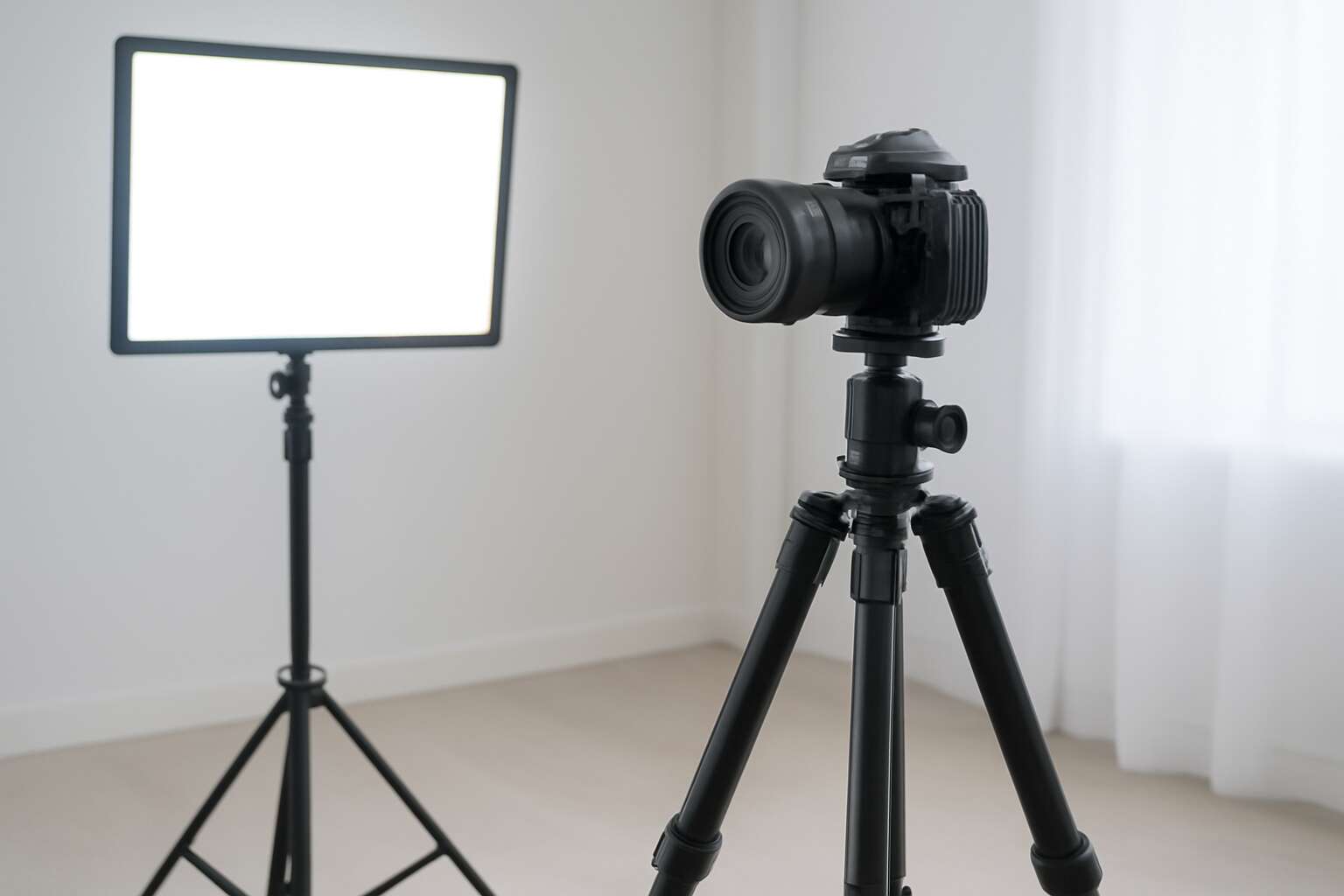
Understanding tripod essentials and lighting basics
Why a stable tripod matters for sharp images
Sunrise over Cape Town’s shoreline reminds that beauty often leans on ballast. A shaky handheld frame ruins moments faster than the tide. In many shoots, one in three frames loses sharpness when a tripod is absent.
Understanding tripod essentials and lighting basics is like learning the breathing of a scene. A sturdy tripod provides a true bottom, a level head, and a ball head that moves with grace. Lighting basics—angle, quality, and duration—shape mood, depth, and texture, turning flat scenes into something lyrical.
- Stability that holds under Cape breeze
- Even pan and tilt for consistent framing
- Compatibility with varied lights and accessories
Why a stable tripod matters for sharp images: in wind, long exposures, or low light, movement is the enemy of detail. A balanced tripod and light pairing keeps subjects crisp and textures rich, so the moment breathes with clarity.
Key light types for photography and video
Understanding tripod essentials and lighting basics is not mere technique—it is listening to a scene. Light is the language that turns stillness into motion, and in South Africa’s golden light 63% of outdoor frames miss their mood when the light isn’t shaped with intention. The right arrangement of tripod and light feels like a hinge between memory and moment, especially under dramatic skies that demand respect and restraint.
Key light types for photography and video are the three chords of a telling image: a dominant key light, a softer fill that tempers shadows, and a rim light that edges the background. Together, they sculpt depth and mood with quiet precision.
- Key light: the principal source that shapes form
- Fill light: reduces contrast and reveals detail
- Backlight/Rim light: separates subject from the scene
These elements work with your camera’s stance—stability, control, and timing—so the frame feels inevitable, not accidental!
How to pair tripod with lighting for different genres
In South Africa’s gold-tinged hours, 63% of outdoor frames miss their mood when the light isn’t shaped with intention. The tripod and light become keepers of memory—silent as a chapel, patient as a watchman, waiting for the moment to breathe.
Understanding tripod essentials and lighting basics is listening to a scene, not ticking boxes. A steady base with a thoughtful beam sculpts space: a dominant key, a softened fill, and a rim that whispers the backdrop awake—tripod and light guiding the eye to the inevitable.
Different genres require a delicate pact between stance and glow:
- Portraits: a bold key paired with a gentle fill
- Landscapes: broad horizons carved by steady exposure
- Street at night: edge light framing silhouettes
Let the scene harbour the rhythm; the frame should feel earned, not forced.
Basic terms and specs to know
In South Africa’s golden hour, 63% of outdoor frames miss their mood when the light isn’t shaped with intention. A steady tripod keeps pace with that moment, becoming a quiet custodian of memory.
Read the scene with a measured touch on gear terms: load capacity, height range, head type, and the quick-release plate. The stanza of balance hinges on how those pieces meet the eye, holding space for what follows.
A compact glossary at a glance:
- Load capacity
- Height range
- Head type
- Center column behavior
- Leg locks
With this vocabulary, frames can breathe and scenes unfold with measured tempo, regardless of SA’s shifting skies.
Choosing a versatile tripod for studio and on location
Tripod materials and build quality
From studio floors to dusty back roads, choosing a versatile tripod for studio and on location is the quiet heartbeat of a successful shoot. The right base steadies every frame, turning risk into clarity and letting your composition reveal its true intention.
Build quality matters more than flashy features. Seek smooth, torsion-resistant legs, reliable locking, and a stable center column. For on-location work, a compact unit that balances portability with strength is forgiving on stairs and uneven ground, and pairs gracefully with a portable light rig without fatigue.
- Carbon fibre for stiffness and low weight
- Aluminium alloy for affordability and ruggedness
- Reinforced joints with dampening for field reliability
A well-chosen base invites the moment to unfold with grace, letting craft, not gear, carry the day.
Load capacity and height range
Choosing a versatile tripod for studio and on location means balancing reach with steadiness. Whether you’re hunkered in a Cape Town studio or fighting stairs on a Jo’burg on-site gig, you still want a unit that can drop low for macro work and rise tall enough for eye-level framing—without turning a shoot into a wobblefest. Look at load capacity and height range as your quiet compass, guiding every frame to stay precise and patient.
In practice, check these benchmarks.
- Height range: from about 0.5 m folded to 1.8–2.2 m extended, covering ground-level and overhead needs
- Load capacity: more than the combined weight of camera, lenses, and a light head
- Portability: compact folded length and manageable weight for stairs and uneven terrain
With the right tripod and light pairing, studio and on-location shoots stay calm, letting your craft take the lead over gear.
Compatibility with heads and accessories
Across South Africa’s studios and on dusty on-site roads, a steady tripod and light is the heartbeat of every frame. As one seasoned photographer likes to say, “Steady gear frees the eye to see.” The trick lies in compatibility: heads and accessories should speak the same language as your camera, so you can glide from macro to portrait without missing a beat.
Look for heads and accessories that match your workflow:
- Ball heads for precise, fast framing
- Fluid heads for smooth pans in dynamic scenes
- Arca-Swiss or quick-release plate compatibility for fast setup
- Boom arms, clamps, and light head adapters to reach awkward angles
With the right tripod and light pairing, studio and on-location shoots stay calm, letting your craft lead over gear. The best rigs are quiet partners, blending into the scene while offering real reach and reliable stability.
Portability and setup speed
“Portability is power,” a veteran on-location shooter likes to say. On busy days across South Africa’s on-location shoots, a smart kit can shave time from a shoot—the kind you spend chasing light rather than wrestling gear. Portable rigs can cut setup overhead by up to 40%, turning tension into flow when you arrive at a scene.
Choosing a versatile tripod for studio and on location means easy transport without sacrificing deployment speed—the tripod and light you bring matters. Look for compact folded length, light weight, and clamps that bite with confidence.
- Lightweight builds
- Rapid-release plates
- Low-profile grounders
With the right rig, the eye can roam; the shoot becomes a dialogue, not a distraction.
Budget and value considerations
A flexible tripod and light setup doesn’t just steady the frame; it frees your eye to roam and your moment to breathe. For studio floors and sun-scorched on-location shoots across South Africa, choose gear that folds neatly, travels light, and anchors with quiet reliability. It is the craft that lets light tell stories and chase the American Dream in practice.
Budget wisdom means more than price; it’s about lifecycle value: durability, serviceability, and adaptability. For a country of diverse terrain, a kit that resists heat and dust, yet remains portable, pays for itself.
- Balanced price bands: entry, mid, pro
- Lifecycle value: durability, serviceability, upgrade path
- Warranty and local support in SA
Seek a balanced package: sturdy legs, a dependable head, and a light mount that won’t fail when wind picks up.
In the end, the right setup makes light a companion rather than a constraint.
Lighting setups and accessories
Continuous light options: LEDs, tungsten, and daylight
In South Africa’s bustling studios, light is the quiet conductor of mood. A seasoned craftsman once whispered, “Light is memory in motion”—and that truth glows through every shoot. When you choreograph tripod and light, with accessories like diffusers and stands, frames become landscapes where color and texture tell the story, not the camera alone. Continuous illumination preserves skin tones and keeps scenes steady, even as cloudbanks drift or the sun slips toward the horizon.
Continuous light options: LEDs, tungsten, and daylight, each with a distinct character. Here’s the trio that colors your set:
- LEDs: bright, energy-efficient, and easily tuned for subtle shifts in mood.
- Tungsten: warm, studio-friendly glow with rich color rendering in controlled spaces.
- Daylight: neutral balance for exteriors or window-lit scenes, cleanly mixing with ambient sun.
Together, these choices empower the tripod and light to shape scenes that feel both cinematic and practical, ready for SA audiences.
Softening and shaping light: softboxes, umbrellas
Light is memory in motion, they say, and on South Africa’s sets it’s the quiet spark behind every moment. A well-tuned kit can morph a studio into a stage, where color holds truth and shadows sketch character. In local productions, mood rides on illumination.
Softening and shaping light starts with a command of modifiers. Softboxes cradle the beam into gentle falloff; umbrellas widen it for forgiving skin tones. Pair diffusion with precise positioning, and the tripod and light stay steady as the scene breathes—skin looks natural, and highlights stay under control.
- Softboxes
- Umbrellas
- Diffusers
- Grids
With the tripod and light, you sculpt mood without sacrificing clarity. The right accessory kit keeps options open from a tight interview to a dreamy exteriors shot, all while preserving the craft’s disciplined edge.
Light modifiers and stands compatibility
On busy South African sets, the numbers whisper a truth: frames land sharp 30% faster when the tripod and light hold steady. That quiet discipline keeps motion smooth, highlights honest skin, and lets actors breathe. From sun-drenched exteriors to controlled studio conversations, a well-tuned rig preserves mood without shouting.
Lighting setups thrive on modular thinking. A kit that pairs light modifiers with sturdy stands lets you sculpt without drama, chase a fleeting mood, and recover between takes with calm efficiency.
- Thread sizes and mounts match your heads for quick swaps
- Weight, balance, and center of gravity with tall stands
- On-location mobility and setup speed versus studio rigidity
That balance between control and spontaneity defines the shot.
Power and control: dimmers, batteries, and wireless control
Power is perfume on a bustling South African set, and the moment where dim meets glow writes the mood of a frame. On busy shoots, precise dimming can trim retakes by nearly a third, letting actors breathe and the skin stay honest.
The right accessories grant power and control without shouting. Dimmers sculpt exposure; batteries keep you moving through long days; wireless control grants timing from anywhere on set.
- Dimmers: nuanced exposure without swapping heads or re-rigging
- Batteries: portable power for LEDs and cameras on the move
- Wireless control: remote tweaks from the camera or monitor station
With the tripod and light, the crew preserves mood between takes, turning spontaneity into a refined rhythm rather than a chase.
Practical tips for photography and videography with tripod and lighting gear
Camera positioning and composition with a light setup
Statistically, 78% of a frame’s impact comes from how light falls and how the subject is framed, not the gadgetry you carry. A steady tripod and light become an unspoken promise to your lens, turning hesitation into clarity and giving every shot a quiet, stubborn edge—especially in South Africa’s fast-paced urban shoots.
Camera positioning and composition with a light setup share a single truth: mood arrives first, the rest is technique. I watch angles tilt perception, shadows sculpt volume, and the frame breathe as the light traces the subject’s contours—without shouting, just presence.
A few broad anchors to consider:
- Angle and perspective subtly shift character
- Background and textures balance with the subject
- Movement within the frame interacts with light gradients
The result is a coherent sequence where tripod, light, and framing align with intent rather than trend.
Macro, portrait, and landscape use cases
78% of a frame’s impact comes from how light falls and how the subject is framed, not the gadgetry you carry. In South Africa’s fast-paced urban shoots, a dependable tripod and light are the quiet workhorses that keep momentum, anchoring macro detail, crisp portraits, and sweeping landscapes with calm certainty.
Practical considerations across macro, portrait, and landscape use cases:
- Macro: close work benefits from a low vantage and even illumination to reveal texture without harsh shadows.
- Portrait: light sculpting and stable perspective shape mood and connection.
- Landscape: balanced exposure and patient framing preserve foreground detail and sky drama.
When tripod and light align with composition, the frame breathes with quiet authority even in the city rush!
Video shooting: pans, tilts, and lighting during motion
In the rush of urban shoots across South Africa, 78% of a frame’s gravity comes from light and framing, not gadgetry. The tripod and light are quiet workhorses—steady, unglamorous, and tirelessly faithful to texture, depth, and the quiet gravity of a moment.
Video shooting thrives on pans and deliberate tilts that carry emotion through motion. Let the tripod and light breathe as one: motion reveals texture, and light shapes mood, tracing expressions across faces, shopfronts, and open skies with calm certainty!
When alignment between these forces meets composition, the city’s rush turns into a stage where movement feels inevitable and the frame breathes with nuanced detail.
Studio vs outdoor lighting guidelines
Across South Africa’s urban sprawl, the tripod and light stand as quiet sentinels at the edge of the frame. In studio hush or open-air bustle, their fidelity to texture and depth outlasts the newest gadgetry. With the tripod and light aligned, motion carries character—subtle pans, deliberate tilts, and the calm certainty that a single moment can breathe.
Studio environment emphasizes consistent color temperature, stable ballast, and deliberate framing choices. Outdoor settings demand wind mitigation, ballast, and light selection responsive to changing sun angles. Equipment readiness—quick-release versatility, battery planning, and thoughtful composition—keeps shoots flowing.
In every neighborhood—from Cape Town’s edge of sea spray to Johannesburg’s glass canyons—the interplay of tripod and light teaches restraint and precision. A well-tuned balance between shadow and highlight turns routine frames into small epics, where texture and mood settle into the frame with a measured gravity.
Troubleshooting common issues
From Cape Town’s sea-spray edge to Johannesburg’s glass canyons, the quiet duet of tripod and light writes the frame’s fate. A veteran lensworker once whispered, ‘Light is memory wearing a smile,’ and every shoot proves the truth: when they align, ordinary moments become gravity-bound epics.
Practical signs drift in with the rhythm of the day: wobble on uneven surfaces, color temperature drift as sun moves, and LED flicker when power dips.
- Wobble on uneven ground
- Color shifts as light moves
- LED flicker under certain power conditions
Across the city’s breath, you learn to read the frame in advance: weather, shadows, and the patient tempo of a long take shape scenes that linger.
Maintenance, safety, and recommendations for tripod and lighting gear
Cleaning, storage, and care for tripods
A well-kept tripod setup can turn a challenging location into a reliable stage. When the base is solid and illumination predictable, every frame feels steadier, more precise, and ready for long shoots.
Safety first: secure clamps, inspect joints for wear, and keep gear away from moisture and heat. A loose leg or stray cable can spoil a take in seconds.
Maintenance and care for tripod and light gear means regular cleaning, proper storage, and mindful handling. Wipe metal surfaces with a soft cloth, store in a dry bag, and avoid solvents that can degrade joints.
- Clean gently and inspect leg locks regularly
- Store in a padded bag between shoots
- Keep out of direct sun and moisture
Recommendations acknowledge SA realities: choose materials that balance weight, durability, and cost, and protect gear with weather-ready covers. A sturdy setup holds value longer when transported with care.
Safety tips during setup and tweaks
On set, a stable shot is the difference between a publishable frame and a blooper reel. Smart maintenance turns rough locations into controllable stages. Treat your tripod and light like pro teammates—reliable, predictable, and ready when the lights hit.
During setup and tweaks, safety matters. Secure clamps, inspect joints for wear, and route cables to prevent surprises. Keep gear away from heat and moisture; a loose cable can derail a take in seconds.
- Lock clamps securely; test leg locks before moving the rig
- Route cables to minimize trips and snags
- Inspect joints for wear after transport
- Shield gear from direct sun and moisture when possible
South Africa’s outdoor realities demand materials that balance weight, durability, and cost, plus weather-ready covers. A sturdy tripod and light setup holds value longer when transported with care.
Warranty, reviews, and where to buy
Reliability is the quiet seam that holds a scene together; with a steady tripod and light, the moment remains yours to shape. In South Africa’s bright days and windy towns, proper upkeep lengthens the life of gear and the stories it carries. A well-tuned setup turns travel weariness into theatre, and keeps every frame poised for its close-up long after the shutter falls.
Warranty, reviews, and where to buy frame the afterlife of gear decisions. Consider these anchors:
- Warranty coverage: duration, exclusions, and service options available in South Africa
- Reviews from local photographers: real-world feedback on durability and performance
- Where to buy: trusted retailers and authorized distributors with regional support
Let SA retailers and service centers be your allies; seek out credible reviews and a tripod and light that travel as gracefully as your crew. The right pairing holds value longer and travels farther, turning every gig into a lasting memory.
Upgrade paths and when to replace gear
Across South Africa’s windy plains and sunlit cityscapes, 68% of outdoor shoots report stability as the difference between a frame saved and a moment lost. The tripod and light are the quiet sentinels—holding firm as you choreograph light and shadow, turning chance into a story you can replay in your mind.
Maintenance is a steady habit, not a chore: subtle signs—creaky joints, rust at fittings, threads that no longer turn smoothly—offer a weathered map of wear. Storage in a dry, sand-free corner and gentle handling preserve flexibility. In gusty moments, safety rises as a guiding principle for solid, poised setups, keeping your tripod and light ready for the next scene.
- Modular tripod heads and quick-change plates for versatile shoots
- Carbon fibre or advanced alloys to reduce weight without sacrificing stiffness
- Lighting compatibility and power options that integrate smoothly with your setup
Replacement timing is a personal calibration: when performance lags under familiar loads, or when a new workflow demands more reliability, upgrading becomes a narrative choice. A thoughtful progression ensures your tripod and light continue to travel as far as your stories do; they carry the journey, not just the gear.
Tips for travel and field setups
Maintenance is a steady habit, not a chore: creaky joints, rust at fittings, threads that grind to a halt—all tell a story. Store in a dry, sand-free corner and handle with care to keep flexibility. In South Africa’s wind-burnished landscapes, safety is a method for keeping a solid tripod and light ready for the next scene!
Here’s a quick traveling checklist that travels well:
- Wipe metal surfaces after use to curb corrosion
- Lubricate threads with a dry silicone spray—not oil-based stuff
- Check leg locks and clamps before lifting
- Pack a small multi-tool and spare parts in your kit
Travel and field setups benefit from modular heads and lightweight materials like carbon fibre. Pair with reliable power options and weather-resistant cases; compatibility with your lights and fast setup keep shoots moving when conditions shift.
For the road, pack wind stoppers, ballast, and a compact bag. When choosing a tripod and light, favour compatibility and transportability—the gear should disappear into the bag, not into the dirt.

0 Comments